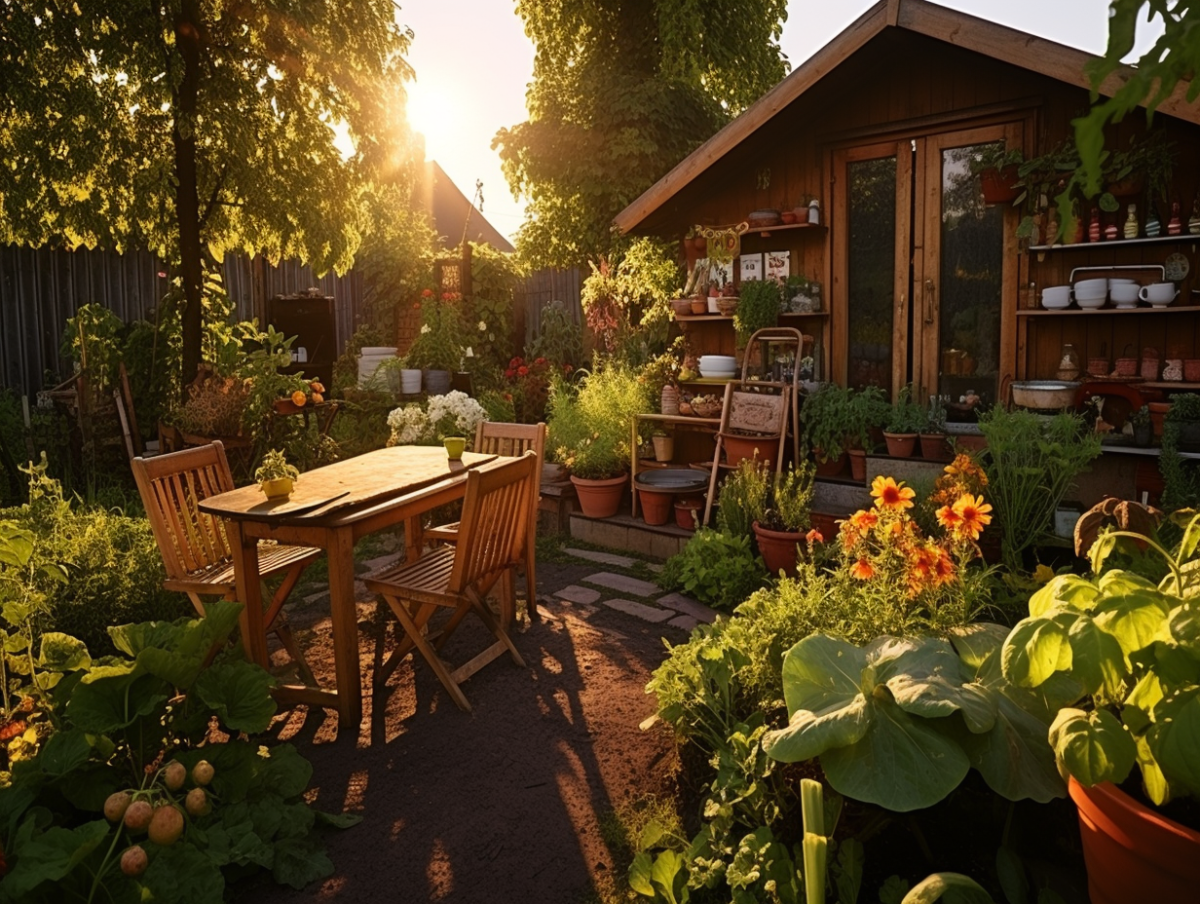
The design of green spaces represents much more than just a question of aesthetics. It is an opportunity to optimize the use of your garden, creating a balance between natural beauty, functionality, and respect for the environment. Whether you have a small terrace or a large plot of land, every green space can be transformed into a haven of peace, a place for entertainment, or a productive vegetable garden. Thinking about the arrangement of plants, the choice of materials, and the orientation of resting or play areas also contributes to the biodiversity and sustainability of your garden.
Space Optimization and Functionality: The Keys to a Well-Designed Garden
In the design of a modern garden, space optimization and functionality prove to be the pillars of a successful project. The idea is not just to create a recreational area, but to design an outdoor living space that meets multiple needs: relaxation, vegetable cultivation, or social space. The arrangement of plants, with taller ones at the back to provide depth and shorter ones at the front to define the space, is not merely a matter of aesthetics but a strategic reflection on how each element contributes to the overall garden.
The terrace, often made of noble materials such as wood, stone, or concrete, becomes an extension of the home. It should be a friendly gathering place, a harmonious transition between the indoors and outdoors. The choice of material will determine not only the aesthetic aspect but also the durability and ease of maintenance of your outdoor space. The terrace, integrated into the garden, should thus match the chosen style, whether it is modern, French, Japanese, naturalistic, or Mediterranean, and adapt to the desired functions.
The landscaping of a garden should not be left to chance. Consider the different styles and possible functions to create a place that reflects you and stands the test of time. Whether you opt for a garden with clean lines or a flourishing vegetable garden, each element must be thought out in terms of its utility and integration into the whole. Are you considering a landscaping project for your garden? Consult landscaping experts, such as those from E-PAYSAGES, for personalized advice that can transform your vision into a tangible reality.

Ecology and Sustainability: Integrating Green Practices into Your Garden Design
The quest for an ecological garden is part of a conscious approach to respecting the environment and preserving resources. The selection of native plants, suited to the local climate, is a fundamental step. These species, in harmony with the regional ecosystem, require less maintenance, are more resistant to diseases, and naturally integrate into the landscape. The inclusion of edible plants contributes to biodiversity and the creation of a space that is both nourishing and aesthetic.
The efficiency of irrigation is another consideration for a sustainable garden. The drip irrigation system proves to be a relevant solution, allowing for significant water savings and more appropriate irrigation of plants. Unlike traditional sprinkler systems, drip irrigation targets the root zone of plants directly, thus reducing water waste and maintenance costs.
In this dynamic, the role of landscaping professionals is invaluable. Services offered by entities such as E-PAYSAGES include landscaping advice aimed at creating gardens that combine aesthetics, functionality, and respect for the environment. Their expertise allows for the design of green spaces that not only beautify the living environment but also contribute to the ecological health of our planet.
Ultimately, the sustainability of a garden is measured as much by its ability to meet the needs of users as by its environmental impact. A successful green space design is one that weaves an unbreakable bond between man and nature, thus promoting a greener and healthier lifestyle. Consider these aspects to transform your garden into an ecological and sustainable haven.