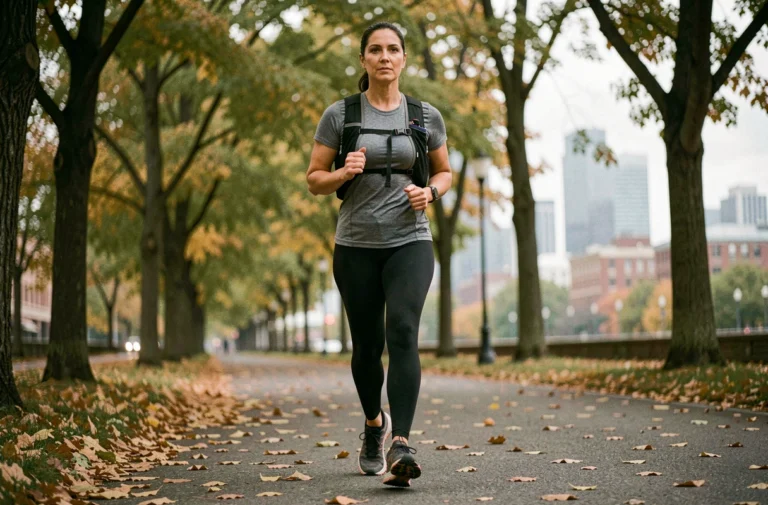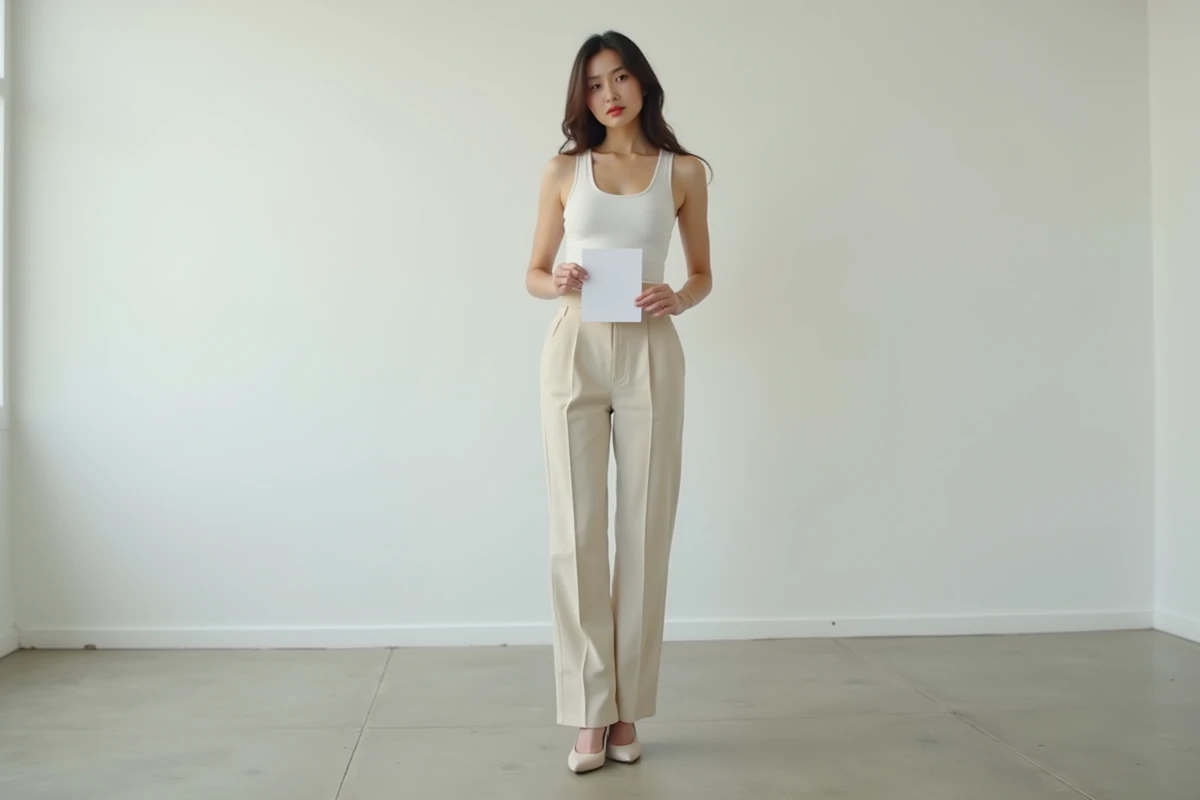
Modeling agencies operate with measurement grids that vary according to the targeted segment. Confusing the requirements of haute couture runway with those of commercial or e-commerce modeling is akin to comparing two distinct professions. To clarify, one must reason by category of service and by geographic market.
Haute couture runway measurements: what castings really require
On European shows, the historical standard remains a minimum of 1.75 m for women’s runway modeling. This requirement is not arbitrary: garments are made on long patterns, calibrated to fall in a certain way on an elongated silhouette.
However, we have observed a slight easing over the past few seasons. Several casting directors report that very editorial profiles, or those with a significant following on social media, are now accessing certain European shows around 1.70-1.72 m. This remains the exception, reserved for models whose face or visual universe compensates for the difference in stature.
To understand the size and weight criteria for female models as a whole, one must distinguish this runway baseline from other segments, where the rules change radically.
In terms of hip, bust, and waist measurements, the classic ranges in haute couture revolve around a size 34-36 (EU). Weight is never an isolated criterion: it is the coherence of proportions that takes precedence in the assessment of a casting director.
French regulations on model weight: agency obligations
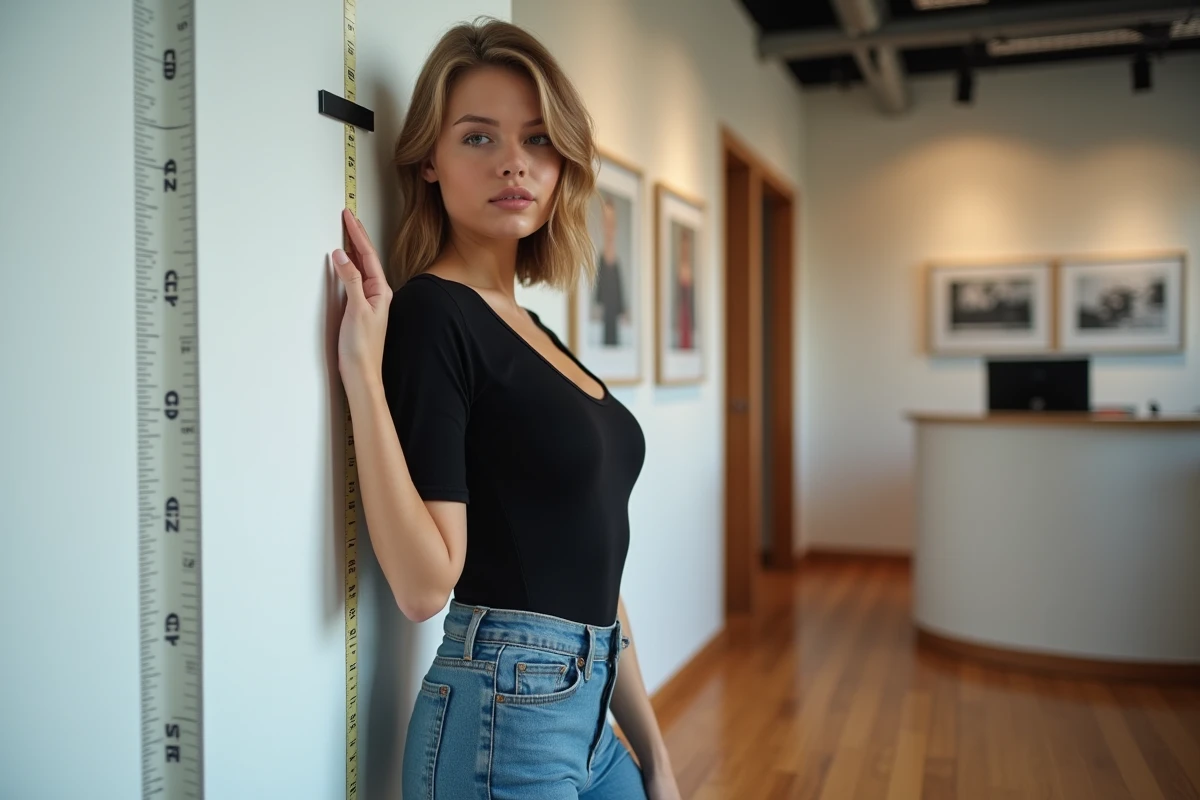
France is one of the few countries to legally regulate thinness in modeling. Since the health law of 2017, a medical certificate attesting to overall health status is required to work. Agencies employing models whose body mass index is deemed incompatible with the activity face sanctions.
In practice, we find that several French agencies now refuse profiles whose silhouette appears dangerously thin, even when the measurements fit the paper standards. The reputational risk weighs as heavily as the legal risk. An agency associated with visibly underweight models faces immediate backlash on social media and from advertisers.
This regulatory framework has direct consequences on castings: bookers evaluate apparent health as much as measurements. A profile that shows a very low waist measurement but has a dull complexion, pronounced dark circles, or visible fatigue will be dismissed, regardless of its compliance with the numerical grids.
Curve, mid-size, and commercial modeling: independent size grids
The curve and plus-size segment operates with its own benchmarks. International specialized agencies recruit female profiles often ranging from size 40 to 52 (EU), with more varied heights than in the classic segment (in practice starting from 1.65 m in certain commercial markets).
In recent years, an intermediate segment known as “mid-size” (approximately 40-44 EU) has gained traction. Several major European fashion e-commerce retailers reserve dedicated castings to showcase clothing on body types that more closely match their actual clientele. The size criteria here focus on proportion and photogenicity, not on a baseline number.
- Commercial and e-commerce modeling: the minimum height often drops to 1.65 m, sometimes less for targeted beauty or accessories campaigns. Weight is less important as long as the silhouette matches the client’s brief.
- Curve and plus-size modeling: agencies seek profiles from size 40 to 52, with attention paid to the harmonious distribution of volumes rather than a target weight.
- Editorial and artistic modeling: here, the uniqueness of the face and appearance takes precedence. Shorter models (1.60-1.67 m) regularly work with recognized agencies.
Polas and measurements: what agencies check at first contact
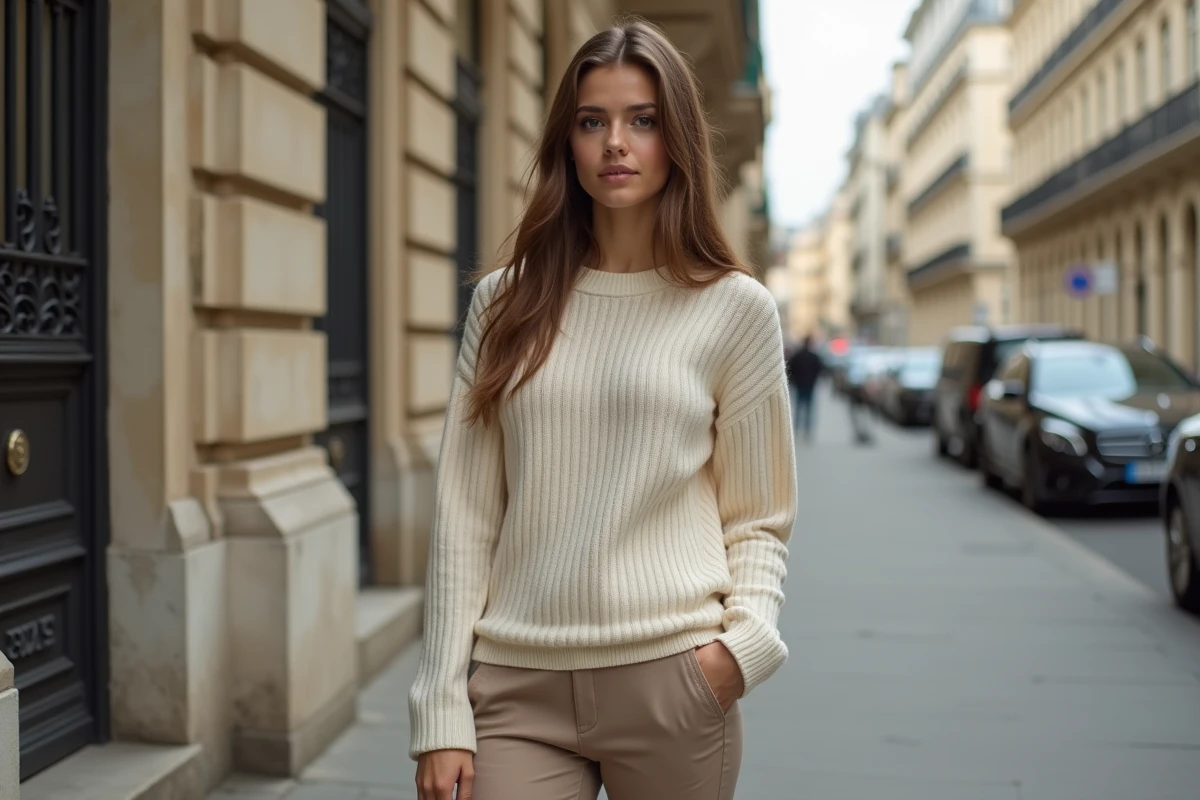
During a first casting or when sending polas (unretouched Polaroid photos), agencies do not merely measure height with a tape measure. They assess a range of parameters that go beyond raw numbers.
The ratio of leg length to torso, shoulder width relative to hips, natural posture in front of the camera: these elements matter as much as the centimeters. A model at 1.73 m with very balanced proportions will often be preferred over a 1.78 m profile whose silhouette visually “breaks” in the image.
- Bust, waist, and hip measurements: systematically measured, they must correspond to the grids of the targeted segment.
- Shoe size: often overlooked by candidates, it nonetheless conditions access to certain shoe castings and runway shows.
- Condition of skin, hair, and nails: an indicator of overall health that bookers scrutinize on polas without makeup.
Measurements are just a pre-selection filter. The final casting relies on the model’s ability to wear a garment and convey something in front of a camera. We recommend candidates focus on the quality of their polas and their book rather than striving to reach a specific number on the scale.
Diversity of body types and market evolution
The fashion industry is gradually incorporating a diversity of bodies that would have been unthinkable a decade ago. The size and weight criteria for becoming a female model are no longer limited to a single universal grid. Each segment, each agency, each geographic market applies its own benchmarks.
The clearest trend concerns the widening of e-commerce castings, where photogenicity and alignment with the client brief outweigh standardized measurements. For a candidate who does not fit the haute couture runway boxes, opportunities in commercial, curve, or editorial modeling have never been more abundant. The size filter remains a parameter, not a verdict.