
The market for tarps and cover films for garden greenhouses has significantly complicated in recent years. The reformulations related to European standards on plastic additives, the arrival of diffusing films long reserved for professionals, and the multiplication of references make the choice less clear than it used to be. Choosing equipment for greenhouses and garden tarps requires understanding a few technical parameters before comparing catalogs.
Diffusing films for greenhouses: a transfer from professional market gardening to amateur gardening
Thickness, transparency, lifespan: these three criteria dominate most comparisons of greenhouse tarps. However, the ability of a film to diffuse light rather than letting it pass in direct rays deserves just as much attention.
Diffusing films break direct solar radiation and redistribute it evenly inside the greenhouse. According to a technical bulletin from Astredhor (Technical Institute of Horticulture) published in 2022, diffusing films reduce leaf burns on tomatoes and cucurbits while limiting temperature differences between shaded areas and exposed areas. The plants receive light more uniformly, which decreases thermal stress during the hottest hours.
Several European manufacturers now offer these films in sizes suitable for garden tunnel greenhouses. If you are looking for greenhouse and tarp equipment that goes beyond simple clear film, the diffusing references deserve to be compared to classic crystal tarps, especially for crops sensitive to sunburn.
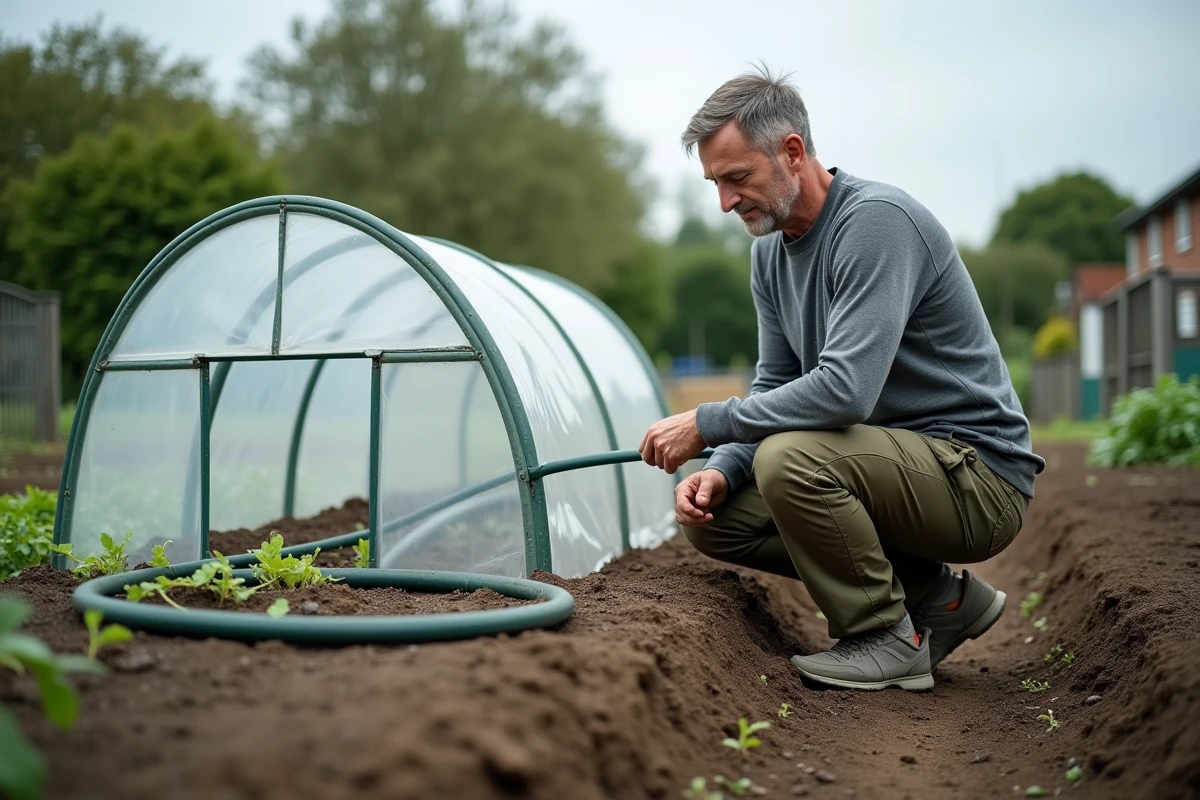
Reformulation of plastic additives: what it changes for the durability of tarps
Competing articles announce lifespans ranging from a few years to a decade depending on the thickness and treatment of the film. However, European standards on stabilizers and plasticizers have been tightened, prompting several manufacturers to reformulate their films.
This reformulation aims to produce tarps that are more easily recyclable. In return, some producers report a slight decrease in mechanical resistance or longevity compared to older formulations. Some gardeners do not notice any significant difference, while others observe accelerated aging under high UV exposure.
For the consumer, the practical consequence is simple. A tarp purchased today does not necessarily have the same properties as an identical model purchased five years ago, even with equivalent thickness and weight. Checking the manufacturing date and the stated composition (presence or absence of anti-UV treatment, type of stabilizer) becomes a useful reflex.
Thermal tarp, reinforced film, or crystal film: concrete selection criteria
The type of tarp directly conditions the internal climate of the greenhouse. Three families of films cover the majority of uses in amateur gardening.
- The crystal film offers maximum transparency and allows almost all visible light to pass through. It is suitable for less sunny regions or for crops that require maximum brightness, but it amplifies heat peaks in summer.
- The thermal tarp retains some of the infrared radiation emitted by the soil during the night, which limits nighttime temperature drops. It is relevant for early sowing or wintering of fragile plants.
- The reinforced film, heavier and strengthened by a mesh, withstands strong winds and hail better. Its light transmission is, however, lower, making it more suitable for exposed areas where sturdiness takes precedence over brightness.
The choice depends on the local climate, the type of crop, and the period of use of the greenhouse. A diffusing thermal film combines heat retention and even light distribution, but its cost is higher than that of a standard crystal film.
Complementary equipment for greenhouses: ventilation and fixation
The tarp alone does not create the climate of a greenhouse. Two equipment aspects are often underestimated at the time of purchase.
Ventilation and heat management
Without proper ventilation, a tunnel greenhouse under crystal film can exceed critical temperatures for most vegetables as early as spring. Roll-up side openings, roof vents, and automatic openings with thermostatic cylinders allow for temperature regulation without manual intervention. Passive ventilation remains the most reliable way to limit excess heat in a garden greenhouse.
Fixation and tension of the tarp
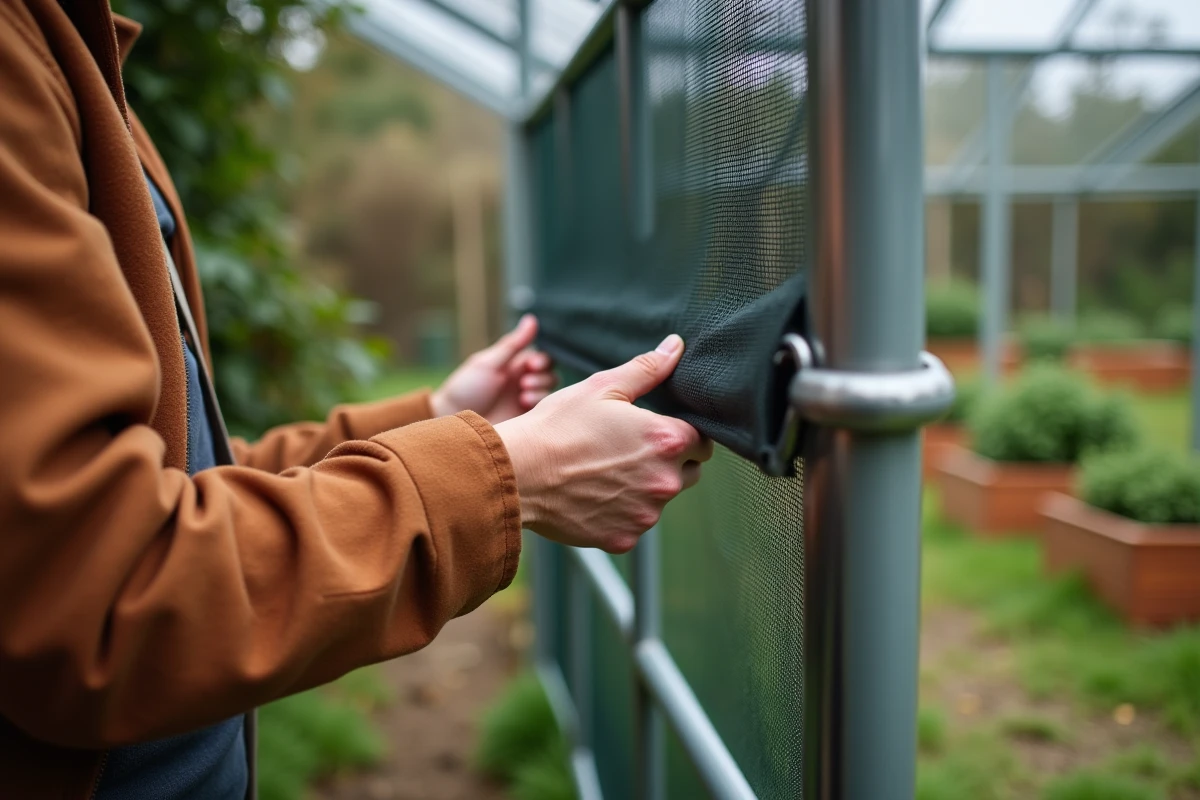
A poorly tensioned tarp ages faster: the flapping in the wind wears the film through friction on the frame. Fixation systems using clips, aluminum profiles, or bungee cords deserve as much attention as the choice of the film itself. On a tunnel greenhouse, hemmed tarps allow for a more stable ground anchoring than simply weighted systems.
- Plastic fixation clips are suitable for small tunnel greenhouses but weaken under UV after a few seasons.
- Aluminum profiles with a bead keep the tarp tensioned more durably, limiting friction points.
- Replacing the fixings at the same time as the tarp prevents a broken clip from tearing a new film at the first storm.
The budget allocated to fixation and ventilation accessories represents a fraction of the total cost of the greenhouse, but it directly conditions the longevity of the cover and the quality of the crops. It is better to prioritize these aspects before looking for the cheapest tarp per square meter.