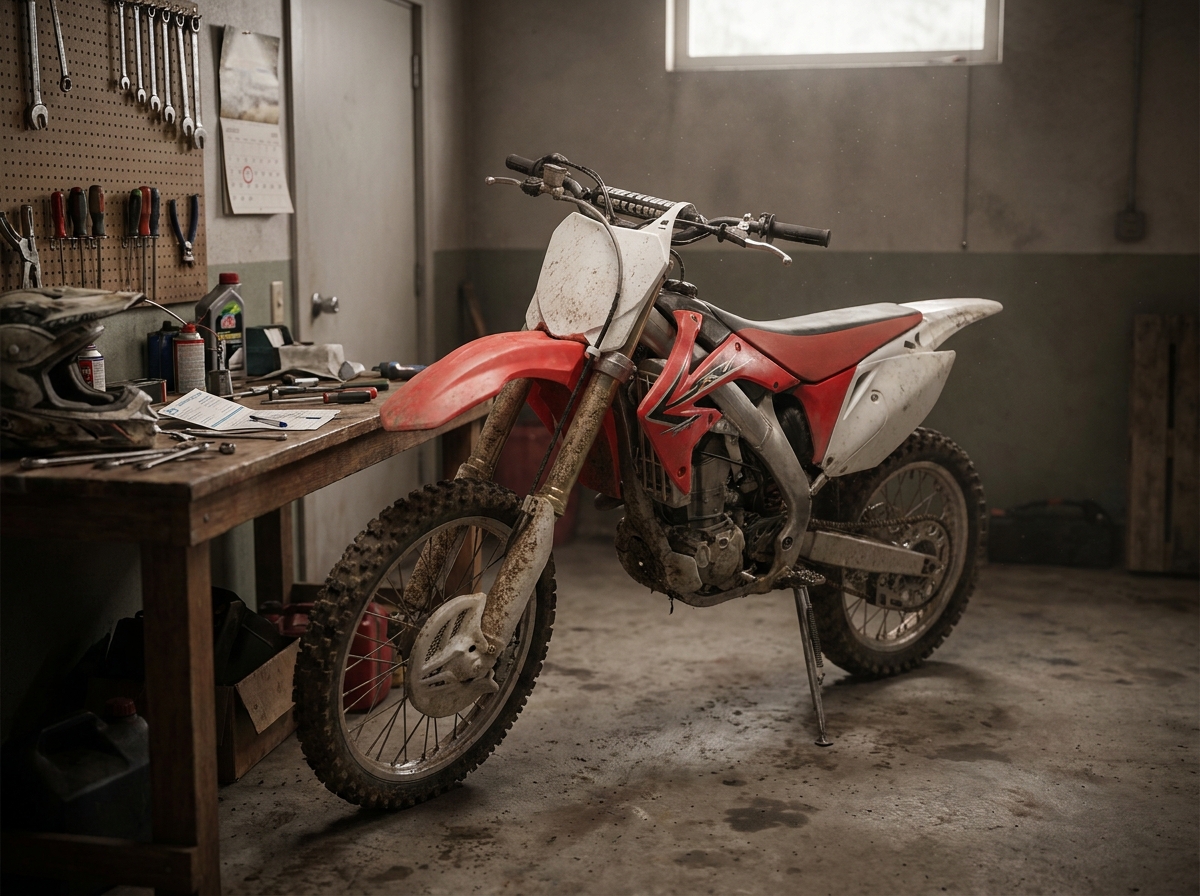
We all know someone who has a dirt bike in their garage, covered up for months, with a motor that still runs very well. The machine comes out two or three times a year on private land, then goes back to collecting dust.
The brake is not mechanical; it is administrative: no one really knows where to start to make this vehicle road legal. And when you start to inquire, the confusion between approval, reception, registration, and insurance discourages most owners even before the first step.
RIPOST Law and Dirt Bike Storage: One More Constraint Since 2026
Since August 2026, the RIPOST law has created Article L.733-1 of the Construction and Housing Code. This text prohibits the storage of motorized vehicles (motorcycles, scooters, quads) in basements, cellars, and common areas of condominium buildings, except in specially designed premises.
For dirt bike owners who stored their machine at the foot of a building or in a cellar, this is an additional obstacle. Moving the bike to a dedicated garage moves it even further away from use. When you have to cross a city to reach a box, then load the bike onto a trailer to go ride on private land, it’s understandable that many give up the idea.
This law primarily targeted urban rodeos. The collateral effect also impacts owners who use their dirt bikes recreationally and legally. The result is the same: the bike remains immobilized due to a lack of practical storage solutions near home.
Homologation of a Dirt Bike for the Road: What Specifically Blocks It
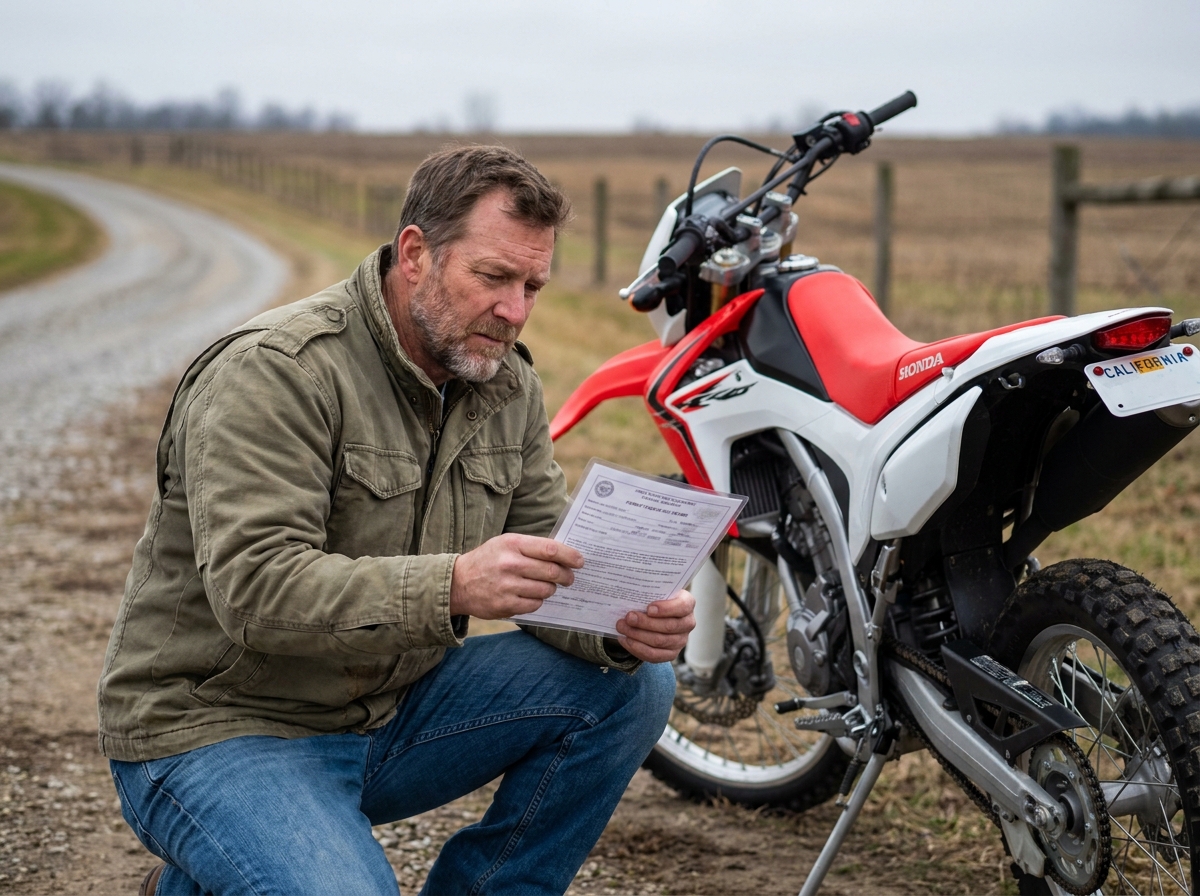
A dirt bike leaves the factory without CE approval. No turn signals, no mirrors, no compliant brake lights, no license plate. To make it legal on public roads, one must go through a single vehicle approval procedure (RTI) with the DREAL or DRIEAT in Île-de-France.
We are talking about a complete technical file: manufacturer sheets, proof of compliance with noise and emission standards, installation of approved road equipment. The cost of modifications often exceeds the value of the bike itself, especially for used models.
Even before starting the procedure, one must be able to subscribe to a suitable motorcycle insurance, which requires a minimum of administrative documents in order. Without registration, no insurance. Without compliant modifications, no registration. The cycle is hard to break when you don’t know the exact order of the steps.
Parts to Install Before Any Request
- Complete lighting: front headlight, rear light, brake light, front and rear turn signals, all CE approved
- Compliant left and right mirrors, side stand, horn, and license plate holder
- Approved silencer meeting regulatory noise thresholds, often incompatible with original racing exhaust systems
- Calibrated speedometer and tires with a speed rating suitable for road use
Each part must bear a verifiable approval marking. Installing a generic turn signal bought online is not enough if the reference is not recognized during inspection.
Private Land, Rural Path, Public Road: Where Can You Ride Without Homologation
The highway code is clear: an unapproved vehicle cannot circulate on public roads. This includes roads, municipal paths, and forest tracks open to traffic. Strictly private land, with the owner’s consent, remains the only legal option.
The nuance that traps many riders concerns rural paths. A path that crosses agricultural property may seem private, but if it is registered in the cadastre as a rural path, it falls under the communal public domain. Riding on it with an unapproved dirt bike exposes you to fines.
Approved circuits by the French motorcycle federation constitute the regulated alternative. The approval of a circuit is itself a heavy process, with administrative steps that can take several months before obtaining or renewing the necessary permits.
Factory Homologated Dirt Bike or Conversion: What Choice for Legal Riding
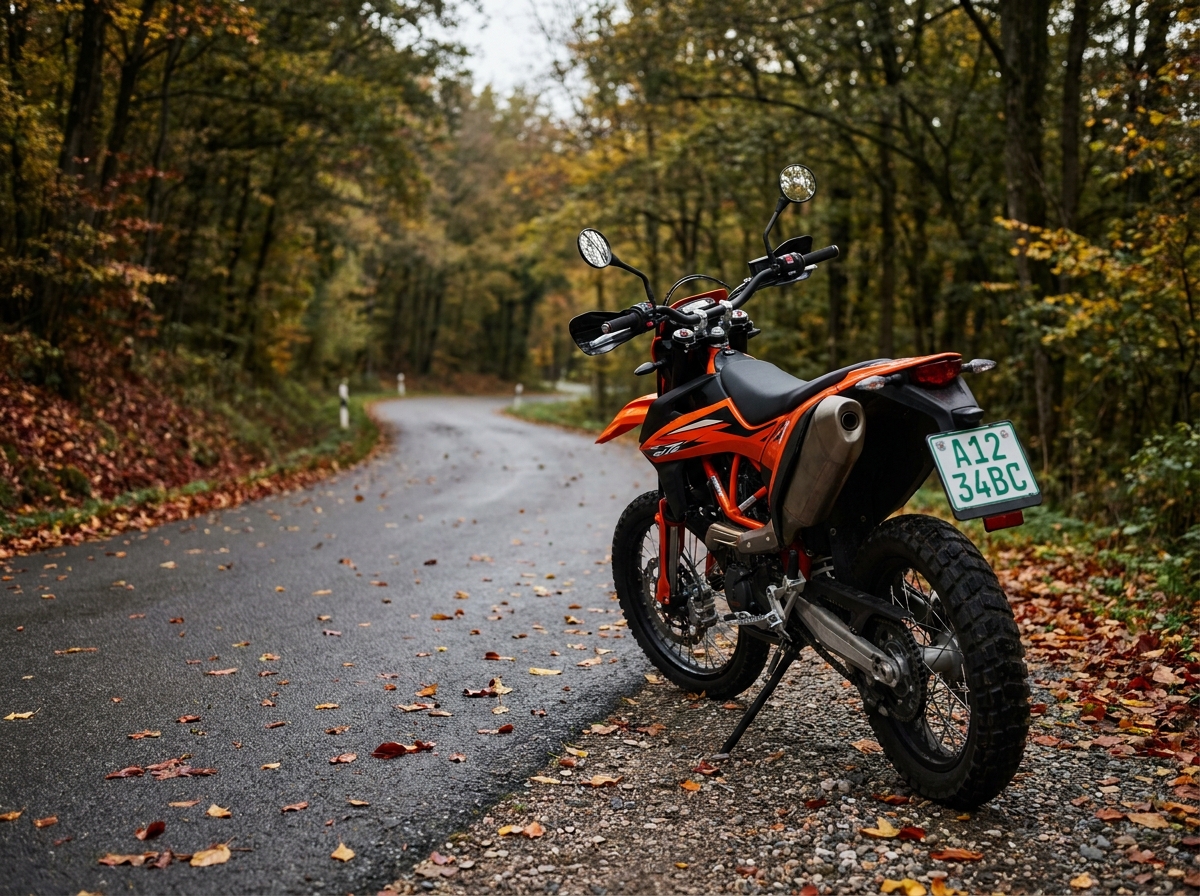
Some manufacturers offer dirt bike models with factory road homologation. They can be recognized by their dual use (supermoto, road enduro). These machines leave the assembly line with all mandatory equipment and proper CE approval.
Buying a factory homologated bike is cheaper than converting a pure dirt bike. The conversion involves parts, specialized labor, going through DREAL, and delays that can stretch over several weeks, sometimes several months depending on the region.
Feedback varies on this point, but several owners report that the RTI procedure heavily depends on the contact person at the prefecture or DREAL. An identical file may be accepted in one department and rejected in another, due to a lack of perfectly uniform evaluation criteria.
What a Registration Changes
Once the bike is registered, everything unlocks. Insurance becomes accessible, periodic technical inspections apply under the same rules as for other two-wheelers, and resale occurs within a legal framework. The registration transforms a stored vehicle into a usable vehicle on a daily basis.
The real problem is not technical. The majority of dirt bikes in garages could ride after a few modifications and an administrative procedure. What is missing is a clear path, with clear steps and predictable costs. As long as this clarity is lacking, thousands of machines will continue to collect dust just a few forms away from a life on the road.