The cognitive conflict, this gap between what the child masters and what they do not yet understand, is the engine of curiosity. Offering playful and creative activities to awaken this curiosity requires precisely calibrating this gap. If it is too small, the child gets bored. If it is too large, they disengage. We observe that most content on the subject piles up workshop ideas without ever addressing this question of dosage.
Overstimulation and Children’s Curiosity: When Excess Activities Hinder Exploration
A child exposed to a continuous flow of directed workshops, educational games, and themed outings eventually loses initiative. They wait for the next activity to be proposed instead of seeking it out themselves. Excess stimulation inhibits autonomous exploration rather than nourishing it.
The mechanism is simple. When every minute is occupied, the child has no downtime to observe, formulate a question, or test a hypothesis on their own. Boredom, often perceived as a problem to solve, is actually a prerequisite for spontaneous curiosity.
We recommend limiting structured activities to one or two per day for preschool children, leaving free time without imposed instructions or materials. A sandbox, a few pebbles, and a stick generate more questions than a pre-cut craft kit with instructions.
At Les P’tits Zouins Zouins, this approach is reflected in the way open-ended materials are offered, allowing the child to decide the path to take, without a fixed scenario.
Hands-On Sensory Activities: Going Beyond Decorative Crafting
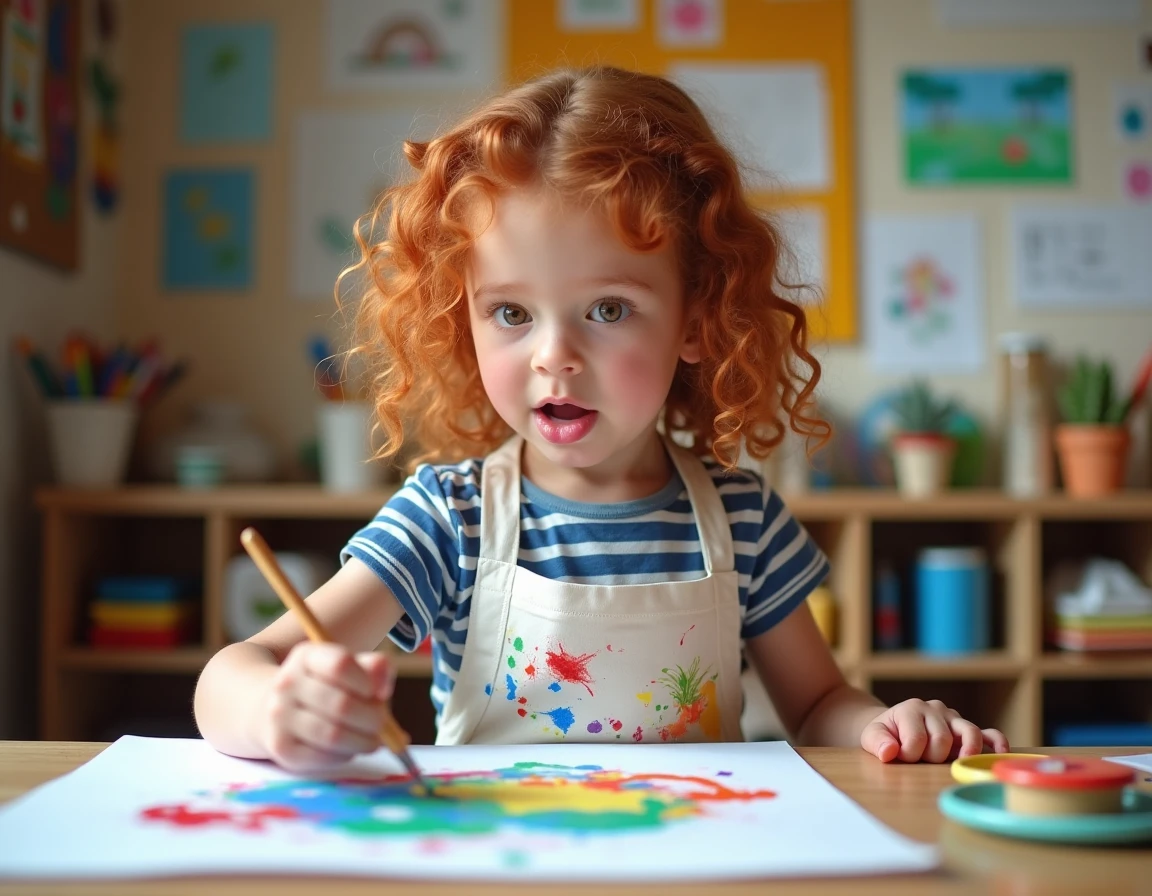
The most effective creative activities for learning are not those that produce a pretty result to display on the refrigerator. It is free manipulation that develops curiosity, not the finished product.
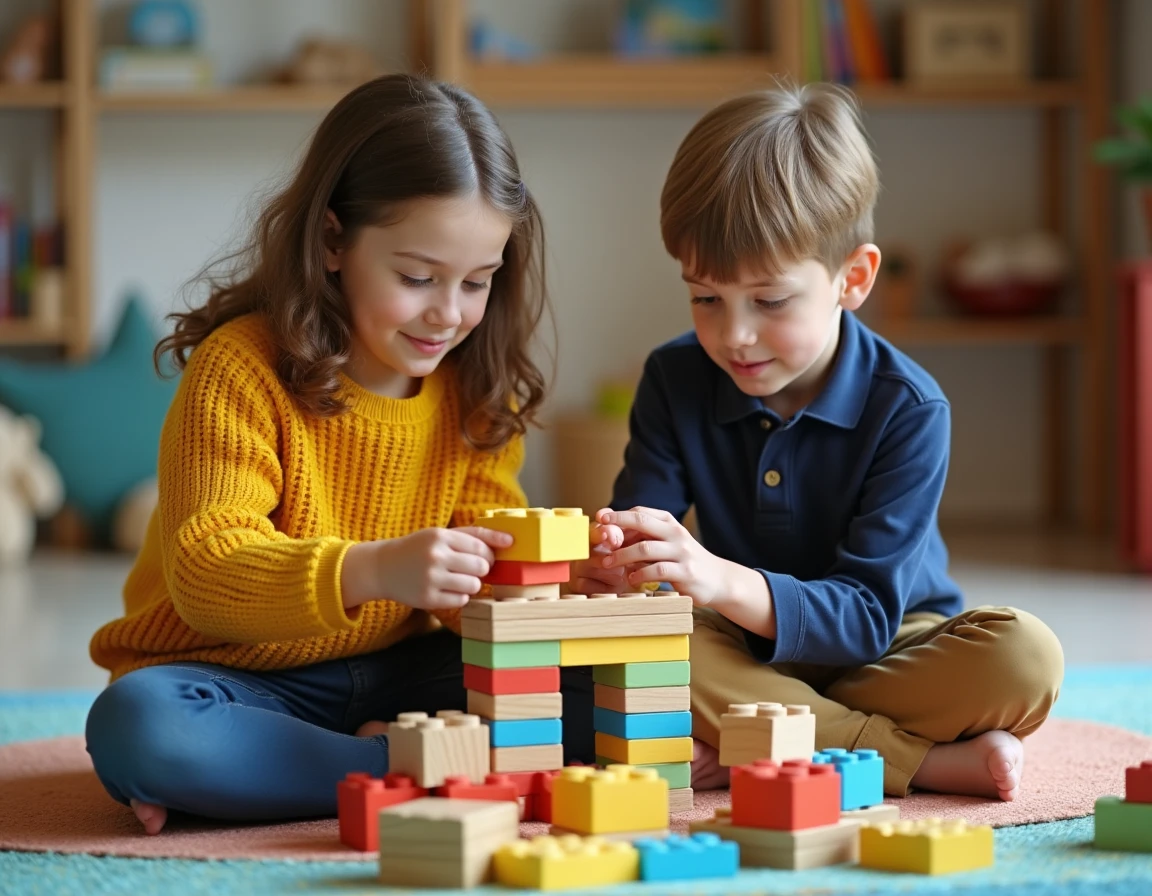
Active pedagogies (Montessori, Reggio Emilia) share this principle: the materials offered must be sensory, open, and without imposed aesthetic goals. A child sorting seeds by size, pouring water between containers of different shapes, or matching sounds to objects hidden in a box is working on their observation and deduction skills.
Three Concrete Supports to Prioritize
- Sound boxes, where the child must identify and match containers by the noise they make when shaken, encourage active listening and hypothesis formulation
- Sorting natural elements (shells, leaves, stones) according to criteria chosen by the child (color, texture, weight) develops categorization without closed instructions
- Exploration bins (water, sand, dirt, flour) with various tools (funnels, colanders, spoons) allow testing cause-and-effect relationships without a manual
The common point of these supports: none prescribe an expected outcome. The child sets their own goals, which keeps the cognitive conflict at an appropriate level.
Nature Treasure Hunt: Structuring Outdoor Exploration
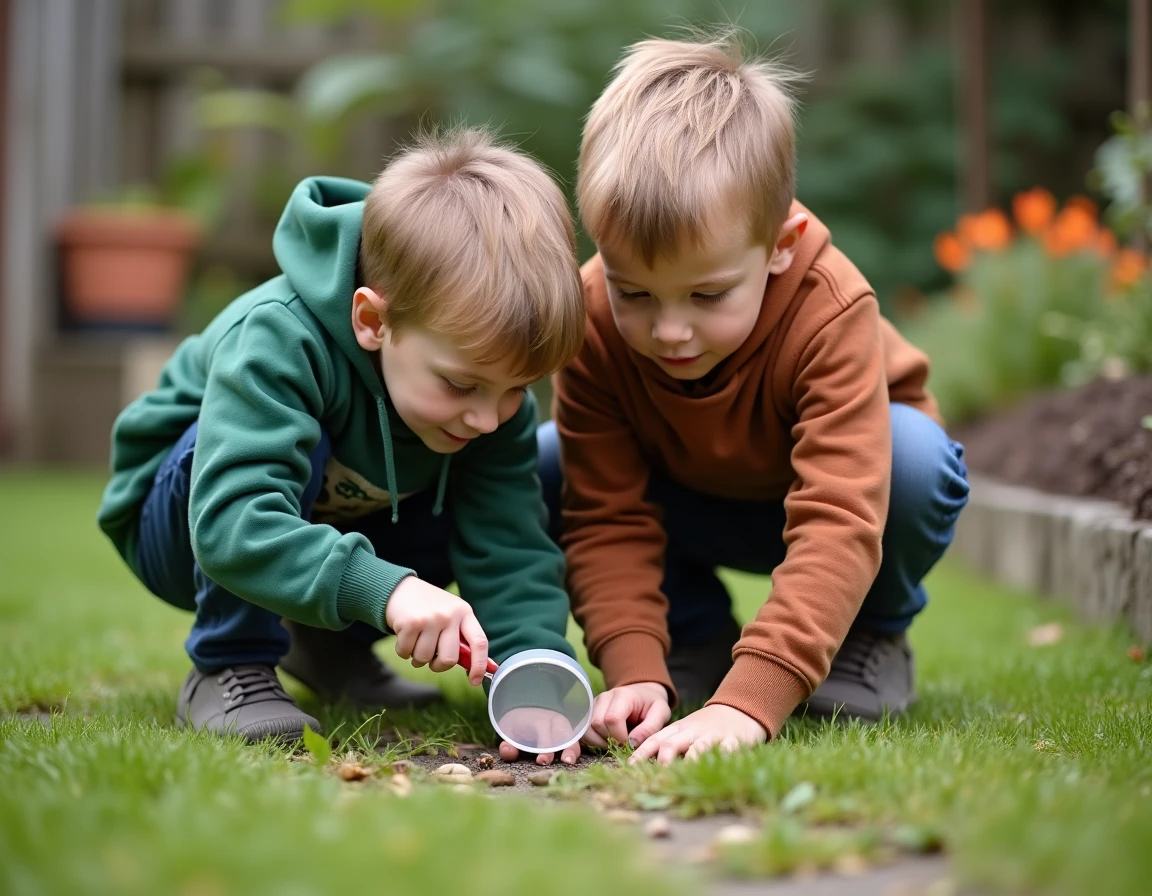
Going out into nature becomes a lever for curiosity when it shifts from a passive walk to a targeted search. The nature treasure hunt, with a list of specific items to find, combines instructions and freedom of exploration.
The difference with a simple walk lies in the search instruction. Asking a child to find “three leaves of different shapes” or “an insect that moves without legs” transforms their perspective. The child shifts from walking mode to active observation mode.
Building an Age-Appropriate Protocol
For preschool children, we recommend short lists (three to five items) with sensory criteria: find something rough, something that smells strong, something lighter than a pebble. The child touches, compares, hesitates.
For older children, the approach benefits from integrating an observation notebook where the child draws and describes what they have found. The learning of writing and observational drawing naturally attaches itself to the curiosity already activated by the search.
A single theme over several outings (garden insects, animal tracks, mushrooms at the foot of trees) produces a cumulative effect. The child returns with questions stemming from the previous outing, which fuels a cycle of autonomous discovery.
Single Theme and Cross-Disciplinary Learning: The Example of Insects
Focusing several activities around a single subject for one to two weeks generates deeper learning than a succession of different themes each day. A single theme creates connections between activities and strengthens long-term memory.
Insects work particularly well as a thread. The child can observe ants in the garden, build an insect hotel with recycled materials, browse an illustrated documentary book, draw what they saw, and compare their drawings with the images in the book.
Each activity feeds into the next. The observational drawing raises questions (“why does the ant have six legs and the spider eight?”), the book provides partial answers that reignite curiosity, and building the insect hotel creates anticipation (“who will come to settle in?”).
- Nature and gardening: direct observation, collection, identification
- Crafting and construction: insect hotel, temporary observation terrarium
- Books and sheets: documentation, comparison between real observation and descriptions
- Sorting and classification games: grouping figurines or images by families, habitat, or mode of movement
This thematic immersion format avoids dispersion and gives the child time to formulate their own questions, which remains the most reliable marker of genuinely active curiosity.
The awakening of curiosity is not measured by the number of activities proposed but by the quality of the space left for the child to explore on their own. Fewer directed workshops, more open materials, a deepened theme rather than ten skimmed over: it is within this framework that questions arise, and with them, the lasting desire to learn.